
Shelley and Claire Claremont in Tuscany
This morning I went up to the Cascine Park and gardens to try and find a lampshade in the famous Tuesday mile long market which runs away from Florence alongside the Arno.

I also had a plan to visit the 18th Century Ice Box pyramid

but I was tempted into this mile long market and didn’t get that far into the park!

Narsiso fountain dedicated to Shelley
What I did find was the fountain shown above, which is called the Fonte di Narciso because of the verses beneath it. These lines refer to the myth of the handsome Narcissus who expired from pining love because he was never able to reach out and hold the handsome youth he saw reflected in the water below him
I had never studied this before but doing so realised that it had been dedicated to English Romantic poet, Percy Bysshe Shelley – evidently because it was here in 1819 that he was inspired to write his famous “Ode al vento dell’ovest” – Ode to the West Wind
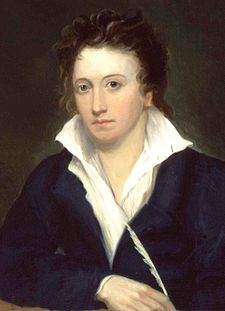
Our dearly beloved Shelley wrote some dodgy rhymes in his verse in my opinion – but in this winter’s cold blasts at least make me applaud his sentiment!
The trumpet of a prophecy! O Wind,
If Winter comes, can Spring be far behind?

Turner’s Tribute to the West Wind
And who, who has ever reached a pinnacle of ambition, can argue with the point of Ozymandias ?
I met a traveller from an antique land
Who said: Two vast and trunkless legs of stone
Stand in the desart. Near them, on the sand,
Half sunk, a shattered visage lies, whose frown,
And wrinkled lip, and sneer of cold command,
Tell that its sculptor well those passions read
Which yet survive, stamped on these lifeless things,
The hand that mocked them and the heart that fed:
And on the pedestal these words appear:
“My name is Ozymandias, king of kings:
Look on my works, ye Mighty, and despair!”
Nothing beside remains. Round the decay
Of that colossal wreck, boundless and bare
The lone and level sands stretch far away.
However enough of Shelley for now , what happened to his sister in law and probable lover Claire Claremont who had travelled across Europe as a threesome after her step-sister Mary Godwin eloped with the handsome, rich and aready famous, poet?
What 18 years old Claire gained from the trip is difficult to tell – it was clear to all that she was enamoured of Shelley and the world talked of their menage a trois although Mary – now Mrs Mary Shelley – always denied any possibity of any liason in the cramped lodging shared by the three travellers.

Looking for a love as illustrious as her helf-sisters Claire transferred her affections to Lord Byron – who responded with lust, if not with love, and before long, predictably – he had left for Switzerland and she was left with child.

The trio set off for Switzerland and arrived before Byron – where Byron eventually resumed relations – writing in self-defence to his half-sister Augusta Leigh, he wrote
What could I do? — a foolish girl — in spite of all I could say or do — would come after me — or rather went before me — for I found her here … I could not exactly play the Stoic with a woman — who had scrambled eight hundred miles to unphilosophize me.”
Eventually Byron agreed to take charge of the child – known as Clare Allegra Byron– on condition that Claire, whom he referred to as a little fiend‘ troubled him no further. Allegra was sent to a Convent school in Venice where she died aged five – and Claire, living in Florence and not even having the closure of seeing her dead child, continued to grieve for the rest of her life.

Clairmont blamed Byron entirely for the death of Allegra and now hated him with the passion she had previously devoted to worshipping him.
Percy Bysshe Shelley’s death by drowning followed only two months after the death of Allegra. He left Claire twelve thousand pounds in his will, which she finally received in 1844.

he Funeral of Shelley by Louis Edouard Fournier (1889); the group members, mourning his loss are from left to right, are Trelawny, Hunt and Byron
Shortly after Clairmont had introduced Shelley to Byron she had met Edward John Trelawny, a friend of none other than English exile in Florence John Temple Leader. Trelawny was to play a major role in the short remaining lives of both Shelley and Byron.
After Shelley’s death, Trelawny sent Claire love letters from Florence pleading with her to marry him, but she was not interested. He remained in contact however and may have been the subject of Henry James novella The Aspern Papers – but more of that tomorrow……..!

Trackbacks/Pingbacks