
Have you ever noticed how many giraffes there are in early Renaissance paintings in Florence?
Some of them look more like the Loch Ness monster than an elegant animal but what happened was that giraffe fever swept Florence in 1486 when al-Ashraf Qaitbay, the Burji Sultan of Egypt, presented a live giraffe as a gift to Lorenzo de’ Medici .
It was a diplomatic gesture, probably enacted in the hope of winning the support of the powerful Medici family in his 1485 war against the powerful Ottoman Empire in Anatolia – it seems Lorenzo responded generously. Then, as now it seems, the Middle East potentates felt the need for European backing for their battles – and Medici Money was much in demand?
A final truce to end the Ottoman war was signed in 1491. The peace lasted for as long as Qaitbay and the Ottoman Sultan Bayezid II remained in power, thus enhancing Qaitbay’s prestige at home and abroad still further – but by that time the poor giraffe was long gone – but clearly not forgotten!
The painting below , done by Giorgio Vasari as part of his refurbishment of the Palazzo Vecchio for Cosimo 1 in the 1540’s , shows Lorenzo il Magnifico surrounded by supplicants – some bearing gifts, but nothing as impressive as the giraffe – literally head and shoulders above the rest of the crowd!

It seems that Lorenzo was delighted with his present but nobody knew what to feed it to give it a healthy diet, and it suffered from the cold Florentine winter as it roamed the streets – occasionally peering into upstairs windows. This must have terrified the life out of some of the Renaissance women who were not allowed to leave the house except for an escorted visit to church? Imagine opening the shutters and seeing those great sad long-lashed eyes gazing back at you – when you have no idea even that such a creature even existed – send for the pomander immediately !
To try and keep the giraffe alive Lorenzo had a special stable , with heating , built for it at the family’s villa at Poggio a Caiano but although he created a special space for the animal’s head it wasn’t easy for it to get it’s head out and eventually – perhaps inevitably – it broke it’s neck and died.
If the giraffe images below do look a little strange it was because apart from the short life in Florence of Lorenzo’s giraffe – such a fabulous creature had only previously been seen in Italy in 46 BC during the time of Emporor Julius Caesar , and that animal was also short-lived as the Emperor cruelly tried to display his wealth and power by having the poor beast torn to shreds by the lions in the Colosseum.
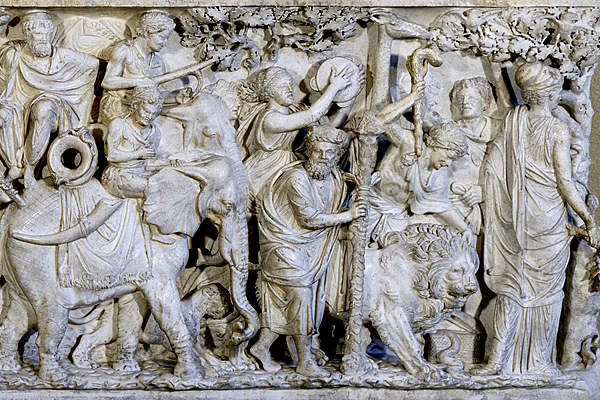
The next time a giraffe was seen in Europe wasn’t until 1827 when Mehmet Ali Pasha sent three to different world leaders – one to George IV of the United Kingdom, one to Francis II, Emperor of Austria, and one to Charles X of France. Sadly only one of these gifts, Zarafa, housed in Paris , survived for more than two years.
The image below of The Adoration of the Magi –(1495 ) is redolent of Renaissance symbolism as well as showing us that the artist, the Florentine Raffaello Botticini (1474-1520).knew about Lorenzo’s giraffe.


The image below is a detail from the The Adoration of the Magi”, part of the fresco cycle by Domenico Ghirlandaio, in the fantastic Tornabuoni Chapel in the church of Santa Maria Novella.

This huge cycle on the life of the Virgin Mary was being painted just after the arrival of the Medici giraffe and if you look closely you can see the animal with it’s keepers on camels descending a hill on the right-hand side.

Below is a detail of a copy of a painting known as Sogliani’s Deposition, from Florentine Mannerist painter usually known as Francesco Bacchiacca – Bachiacca (but also Francesco d’Ubertino Verdi or Francesco Ubertini!) , a later Renaissance painter who was born in Borgo San Lorenzo, near the market place and the Medici Church of San Lorenzo

At the marvellous Pontormo and Rosso Fiorentino Exhibition currently shown at Palazzo Strozzi (Jan-May 2014) – there is a painting by Andrea del Sarto with a giraffe in the background. I am currently trying to find a better photograph of it.

Finally – for more reading:- The Medici giraffe by Marina Belozerskaya (2006) is described as A fascinating exploration, spanning two thousand years, of the central role exotic animals have played in war, diplomacy, and the pomp of rulers and luminaries. I must add to my reading list!
As Brunellesci’s graceful Church of Santo Spirito is one of my local churches in Florence – and also home to a beautiful early wooden crucifix now definitively attributed to Michelangelo – I take friends to visit it rather a lot – and they usually gasp at this early work gifted to the church by the 17 year old artist as a thank you for letting him study the anatomy of the cadavers in the hospital that was attached to the Church in his time.
But more surprisingly when I take my friends on a tour round the church they often ask -“Why is the Loch Ness Monster in this picture?” – and that was the starting point for this Blog – but sadly I will have to add THAT picture if I can sneak a copy of it – when I get back home to Florence on Monday – I cant wait!
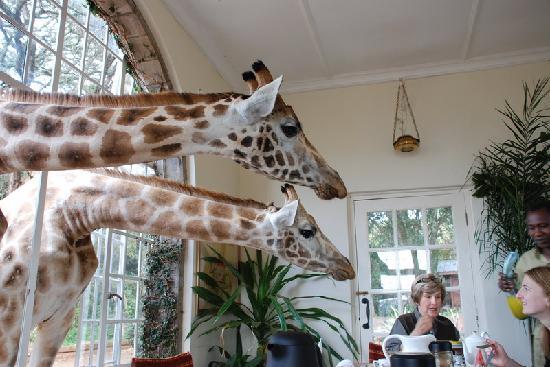
Instead I have a photo from Trip Advisor – winning photos of the year -must be bring your pet to the office day in Nairobi?

That was a fascinating story Penny. Thank you for sharing. Poor, poor Giraffes!
Yes Jane – I now feel rather less sorry for Julius Caesar when Brutus and co turned the tables on him!