
My friend Dr Ann Benson, who has been visiting Florence with me last week, had a specific project in mind for her visit.
In recent months she has not only recovered a precious 17th Century travel diary hand written by 13 year old Charles Lord Herbert , that she found and transcribed, but she also wanted to make an additional packaging cover for the book itself by creating paper marbled in a similar fashion to the faded original cover …and she herself wanted to make the paper to make this cover – an interesting challenge to recreate 17th Century paper – and I was almost as eager as she was to see how it would come out.
But before we get to the paper I will let you read Ann’s own introduction to the man whose the hand written dairy she found whilst she had been doing other research at Badminton House, the main family seat of the Dukes of Beaufort, in Gloucestershire.
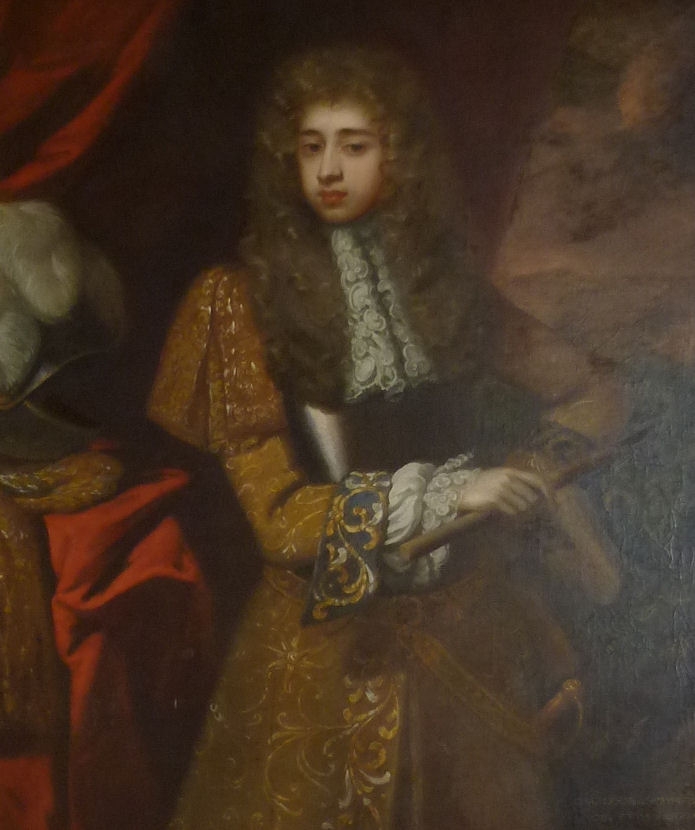
“Charles Somerset ( portrait above) was born in December 1660 to Henry_Somerset,_1st_Duke_of_Beaufort, and Mary Capell. He was styled Lord Herbert of Raglan from 1667 until 1682 when his father became the first Duke of Beaufort and he in turn became Marquis of Worcester.
He was heir apparent to the Somerset’s extensive estates in England and Wales.
Charles was elected the youngest ever (aged 13) Fellow of the Royal Society. [not the Royal Society of Arts – this one is for science, was founded by Charles II in 1660 and is known just as The Royal Society – it’s famous!].
When he departed on Thursday 8 May 1673 for a tour of France, he was first conducted by his father to Whitehall to be blessed by Charles II, his godfather. Then he was joined by his ‘Governor Edward Chamberlayne Dr of Laws, a preceptor Mr Watkins, a Valet de Chamber Mark Rottier, and one Lacky’.
Due to bad weather their departure from Dover was delayed until Wednesday 14th May. Charles writes in his travel diary that he was sea sick during the three and a half-hour crossing.
The diary is kept in Charles’s own hand and gives detailed accounts of his journey throughout France during the next fourteen months.
The diary is fragile and the handwriting is unclear in several of its sections.
Photographing and transcribing the diary’s pages has enabled conservation of its historically significant content.
Charles became an MP and had oversight of the Somerset’s Welsh estates from his home near Monmouth. However, he was killed in a coaching accident in 1698, aged just 37. Because Charles predeceased his father, on the Duke’s death the dukedom passed to Charles’s son, Henry.”
It is rare to find a travel diary of this date (1673) particularly one written in the hand of the aristocrat himself.
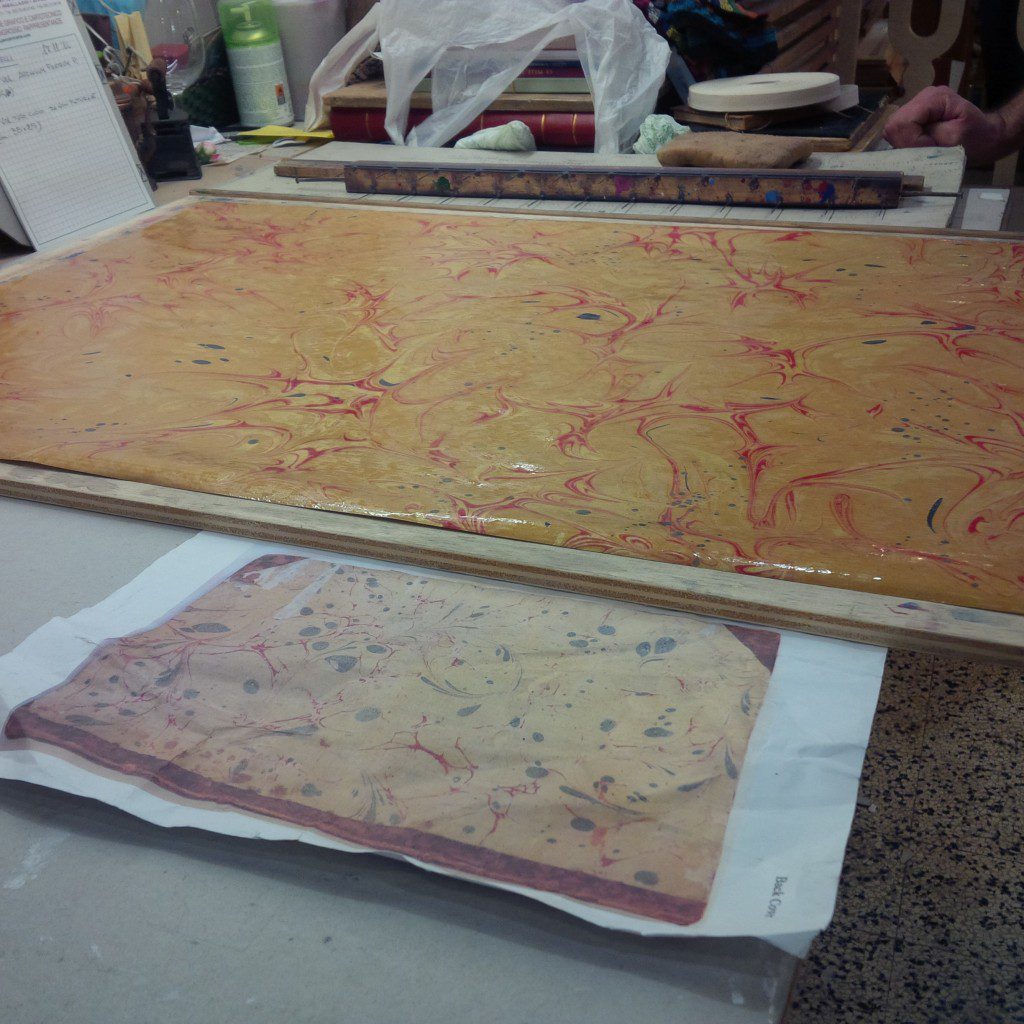
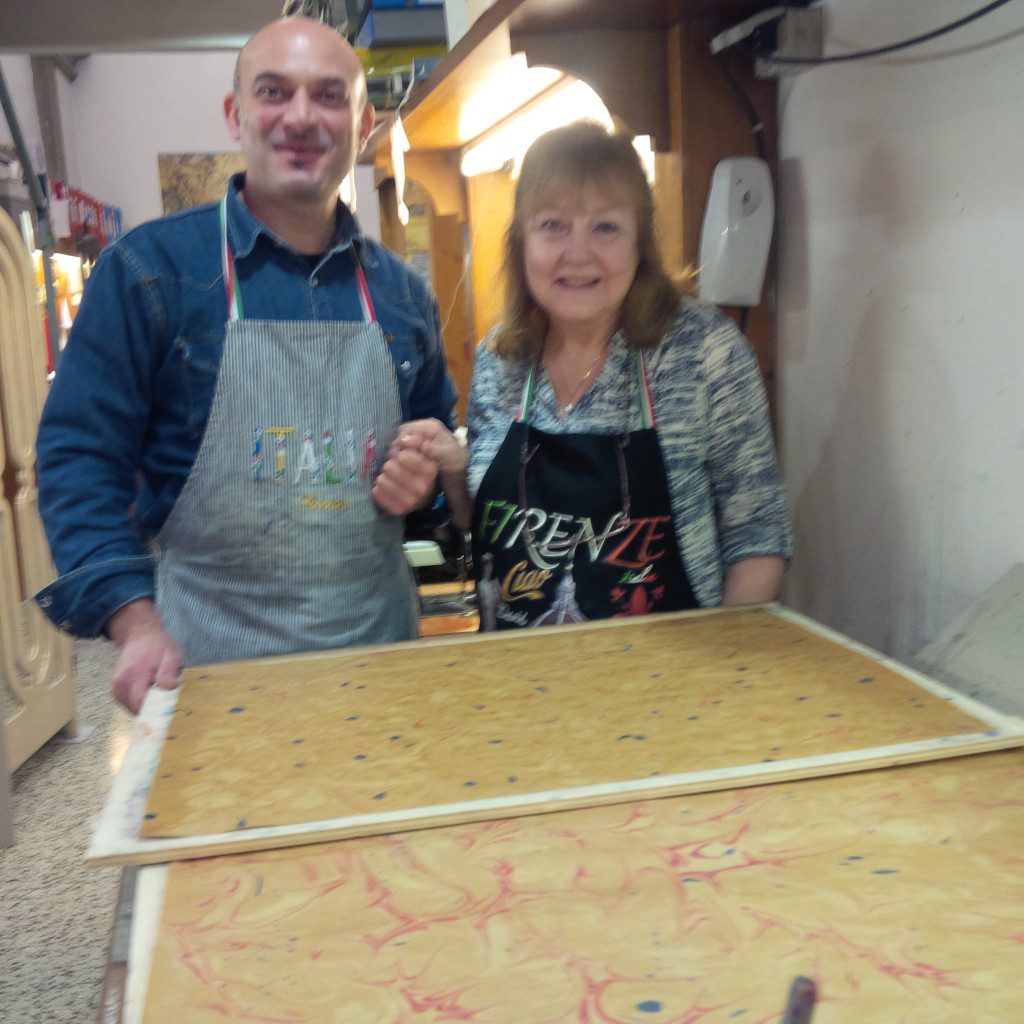
Although the covers of his diary have faded, it’s still possible to see the original pattern and colours and this was Ann’s challenge to create during our paper -marbling class – Her first of four sheets of paper is shown below – together with a recent printed copy of the original – Not bad for a first go!
Ann really entered into this project with enthusiasm but she also used her skills as a chemist to make sure that she got the colour mix correct , which is not as easy as it looks, because , as you can see below, the colours look very different in the bath of algae paste to when they settle on the paper.
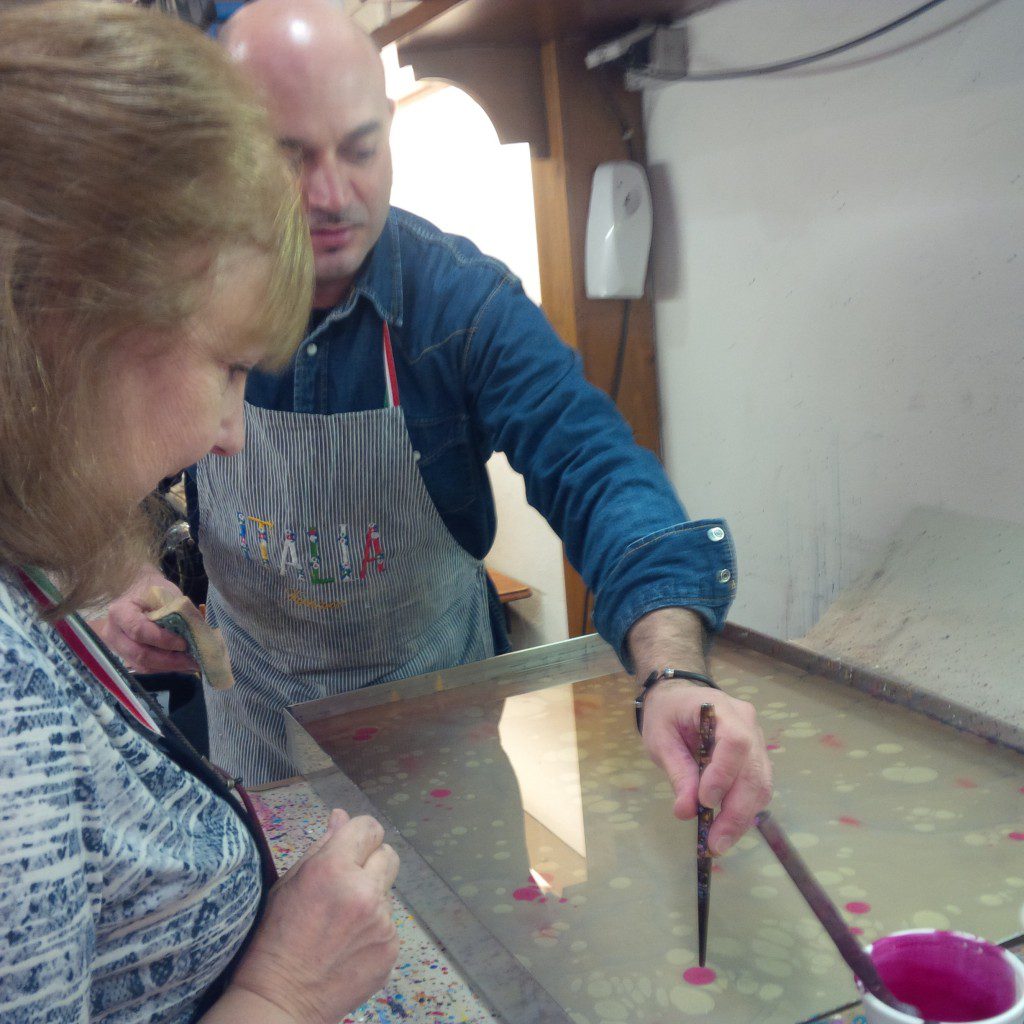
Above Riccardo is demonstrating the process for removing too large blobs of colour – I had never seen this done before – magic!
Below is the third sheet – almost there – just need a little more red swirls!
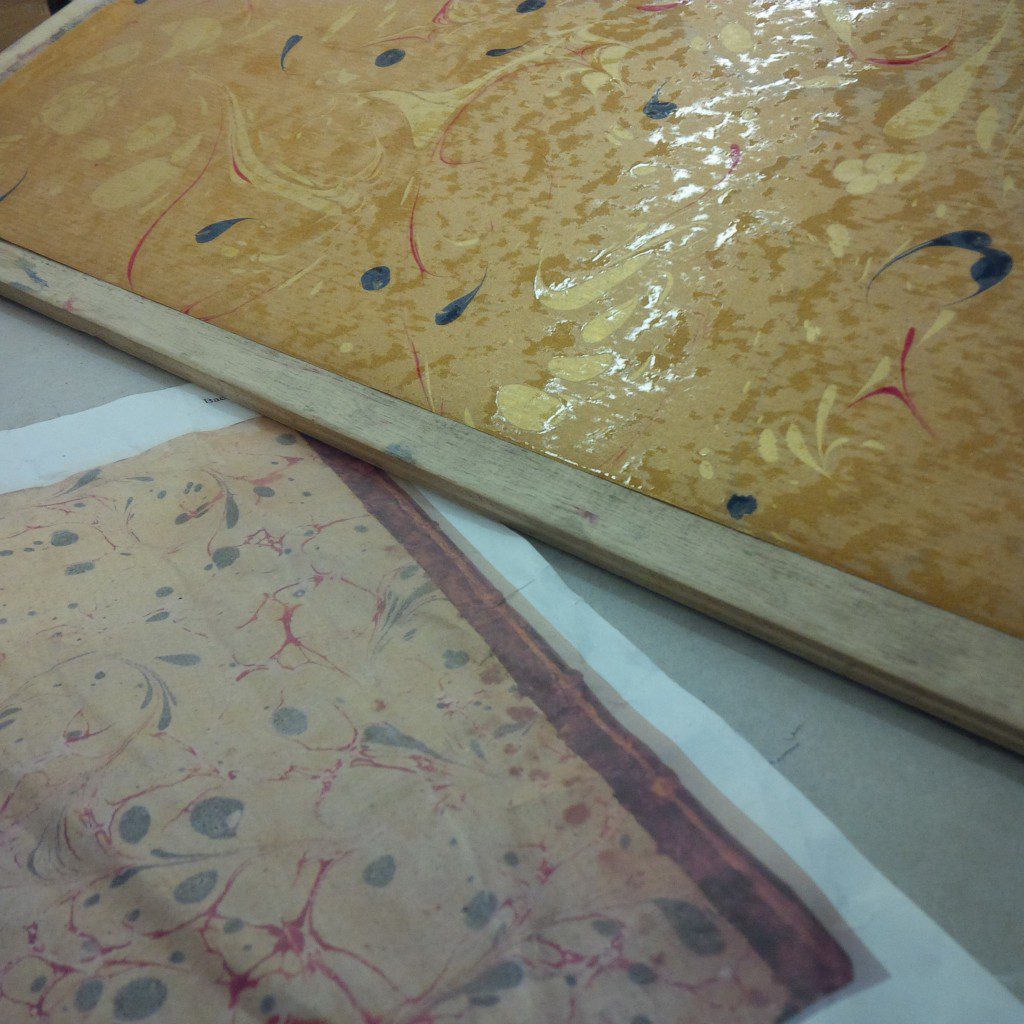
Final copy – with first copy – everyone all smiles.
The final sheet of paper – was a more classic gold and dried very close to the original design Ann was copying from.
The colour always looks more antique after it dries.
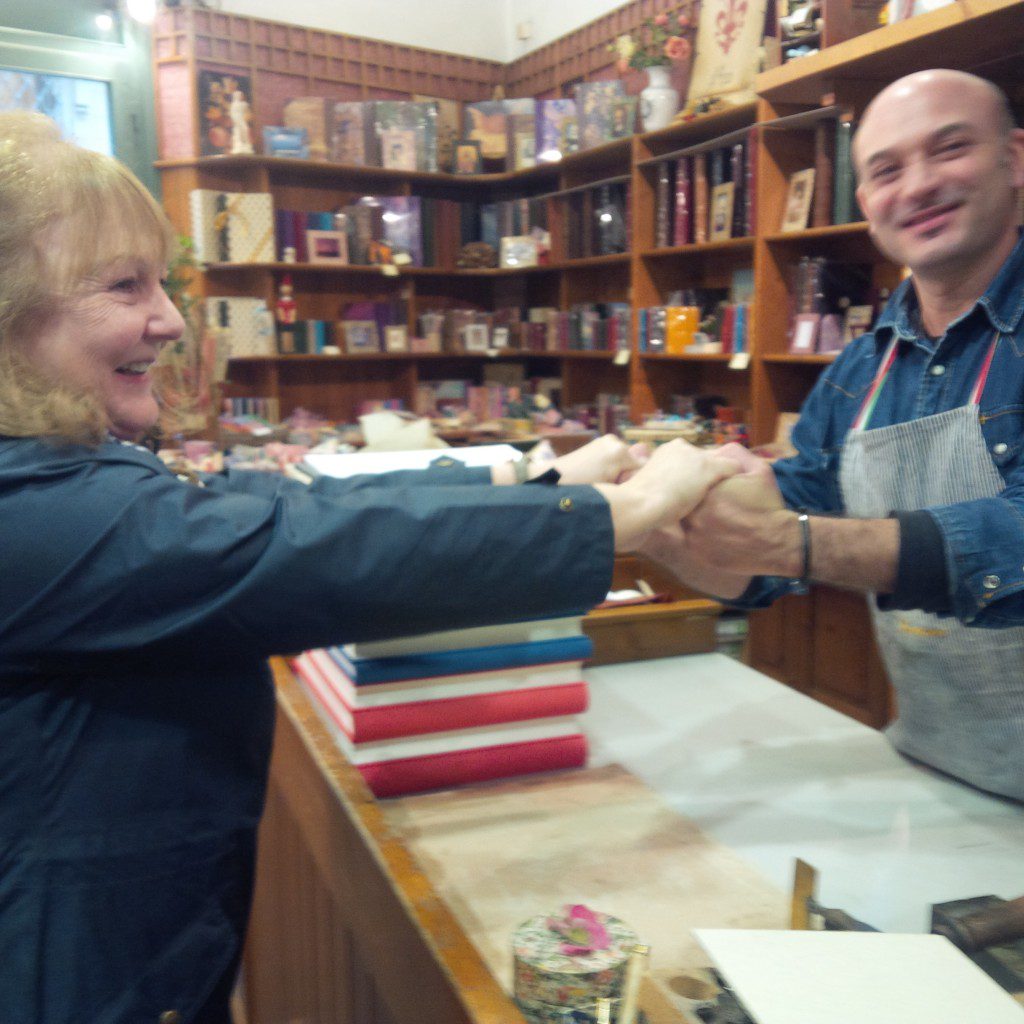
More information about Ann Benson – shown above thanking our teacher Riccardo Lucci for all his help in getting her paper so close to the original.
Ann Benson was originally trained as a chemist and taught chemistry for many years. Through serious illness and many operations in her forties she was forced to retire from teaching. Nonetheless after she recovered she took higher degrees in learning and assessment and became an university lecturer researching how assessment influences learning. She laughs as she says “That’s putting it very simply! – It is hugely complex field and that’s what my doctorate/ PhD is in!”
She was then asked to become the assessment consultant for the UK Cabinet Office, where she served for several years until she retired in her mid -60s. At this point instead of taking it easy, and despite friends saying she was mad at her age, she decided to do something completely different and, having been a scientist all her life, turned to history and took an MA in designed landscape history . Clearly Ann is a lady with an indomitable spirit who just loves learning!
This latest degree has opened many doors, including those of Badminton House, the main family seat of the Dukes of Beaufort, in Gloucestershire, where she personally discovered in their vast library the hand written travel dairy of 13 year old Charles, Lord Herbert, who was the first Duke of Beaufort’s (then the richest and most powerful man after the King) only son and heir.

No-one had studied it or transcribed it until Ann realised its importance as being the diary of the youngest ever member of The Royal Society. Their First Charter , granted by King Charles II, was given a Royal Charter of incorporation and passed the Great Seal on 15 July 1662.
The Charter, shown below, was read before the Society on 13 August of the same year.

Sadly for my story, our young hero never made it as far as Florence on his Grand Tour – I would have loved to have known what he thought about it.
