
There are two sculptures of Marsyas positioned opposite one another in the Uffizi and they are so unusual I have often been asked by my visitors to explain what is going on!
Unfortunately this is not a particularly edifying story because the satyr Marsyas is portrayed in both sculptures bound with his hands above his head as he is hung out like a piece of meat to face his gruesome punishment of being flayed alive.

On the face of it the punishment seems way in excess of his crime because Marsyas was so punished merely for losing a music contest.

However the punishment was inflicted upon the lively Satyr more for the act of hubris than for failure, because the person he challenged was none other than the Greek God Apollo – the God of Music famed – albeit through his agent Orpheus – for even soothing the savage breasts of the savage beasts.
Apollo was not an easy act to follow!
Part of the reason Apollo got so furious was because initially Marysas playing on his instrument the aulos didn’t do too badly, and he was actually walking away from the contest gloating over his triumph – at which point Apollo turned his own favourite instrument , the Lyre, upside down and proceeded to play the same tune with equal skill. As this was impossible to emulate on a double -piped wind instrument the Muses gave their final judgement to their fellow God Apollo as the victor.
The terms of the contest allowed the winner to punish the defeated party any way he wanted – and Apollo cruelly chose a punishment he could take his time over inflicting – and is usually depicted knife hand personally removing the skin from his rival!

Renaissance Sculptors who wanted to portray Marysas often selected the red marble from Verona, (so-called Veronese marble) which was in fact brocatello limestone.
The white lines in the material give it a texture and look very similar to steak so if was ideal for depicting flayed flesh.
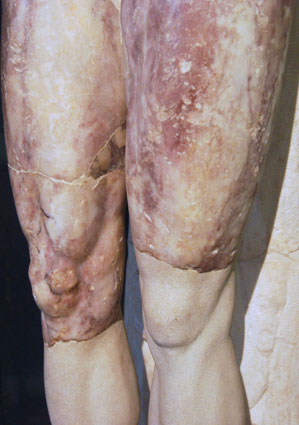
Of the two copies in the Uffizi- the so-called white Marsyas was bought by Cosimo Il Vecchio in Rome and was originally kept in the Palazzo Medici for the family to study.
A replica of the original Greek Marsyas statue that dates to the 2nd Century B.C was in the Medici collection by the 16th Century.
Vasari tells us that the ancient Red Marsyas was badly broken so Cosimo’s Grandson Lorenzo the Magnificent commissioned Verrocchio to remake “the missing legs , thighs and arms out of pieces of red marble so skilfully that Lorenzo was more than satisfied and was able to place it opposite the other statue , on the other side of the door”.
And so they hang still – opposite one-another in the halls of the Uffizi – a grizzly sight!

