
Via dell’Ardiglione

“What’s in a name?” – mused Juliet from her balcony in Verona and although few streets in Florence can claim to smell as sweet as a rose, it is an excellent question because most of the street names in Florence have good historical reasons for having the name that they have now – or changing from those that they have had in the past.
For example this street, Via dell’Ardiglione, used to be called Chiasso del Fico, because there used to be a fig-tree there and then became Via della Fibbia – which means “buckle” in Italian, probably due to the way it creates a square, which then connects with the Via dei Seragli – less clear is why this name then developed officially into Ardiglione – which is actually the sharp prong of a buckle but that is what this street is – the street of the mobile prong of a buckle?
All this and many fascinating facts can be found in a marvellous book of Street Names of Florence written by the British Institute’s own Mark Roberts.

I take this little side street every day for my morning coffee and every time as I trot along this street I marvel at my good fortune to be able to walk over these ancient slabs, greeting my neighbours and their dogs, grumbling at some of the new graffiti that is being written on newly painted walls and saluting the mother of Fra Filippo Lippi who, according to Vasari died not long after giving birth to him in 1406 in the house shown below, with a commemorative plaque, that still stands on this street.

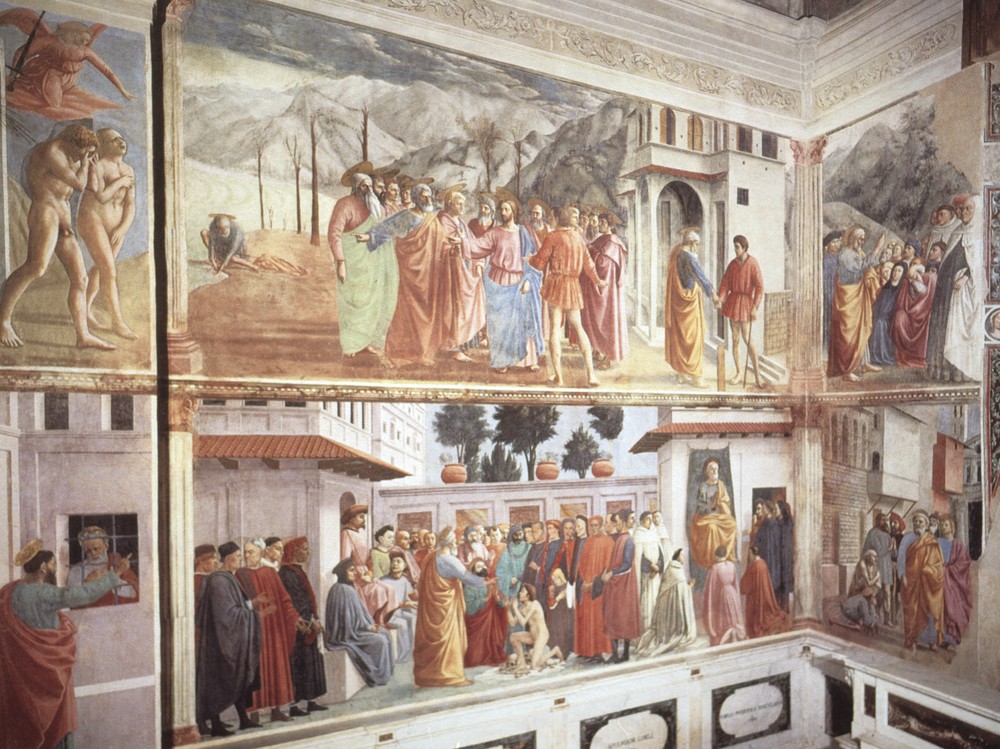
So Fra Filippo Lippi learnt to paint, and grew up to womanise, and later to create a scandal by fathering two children with a very beautiful and equally reluctant nun called Lucezia Buti Much later to complete the circle his son – Filippino ( little) Lippi was asked to come back and complete the works left unfinished when Masolino departed for Hungary and Masaccio for Rome in the 1420’s.

These days a new artist also works this street – and adds his not unpleasant graffiti to the usual protest writings on the walls of the Nardini Garden.
The artist .K (punto K) adds his protests against the gardens closure in what seems to me to be a much more thought-proving and thus effective way.
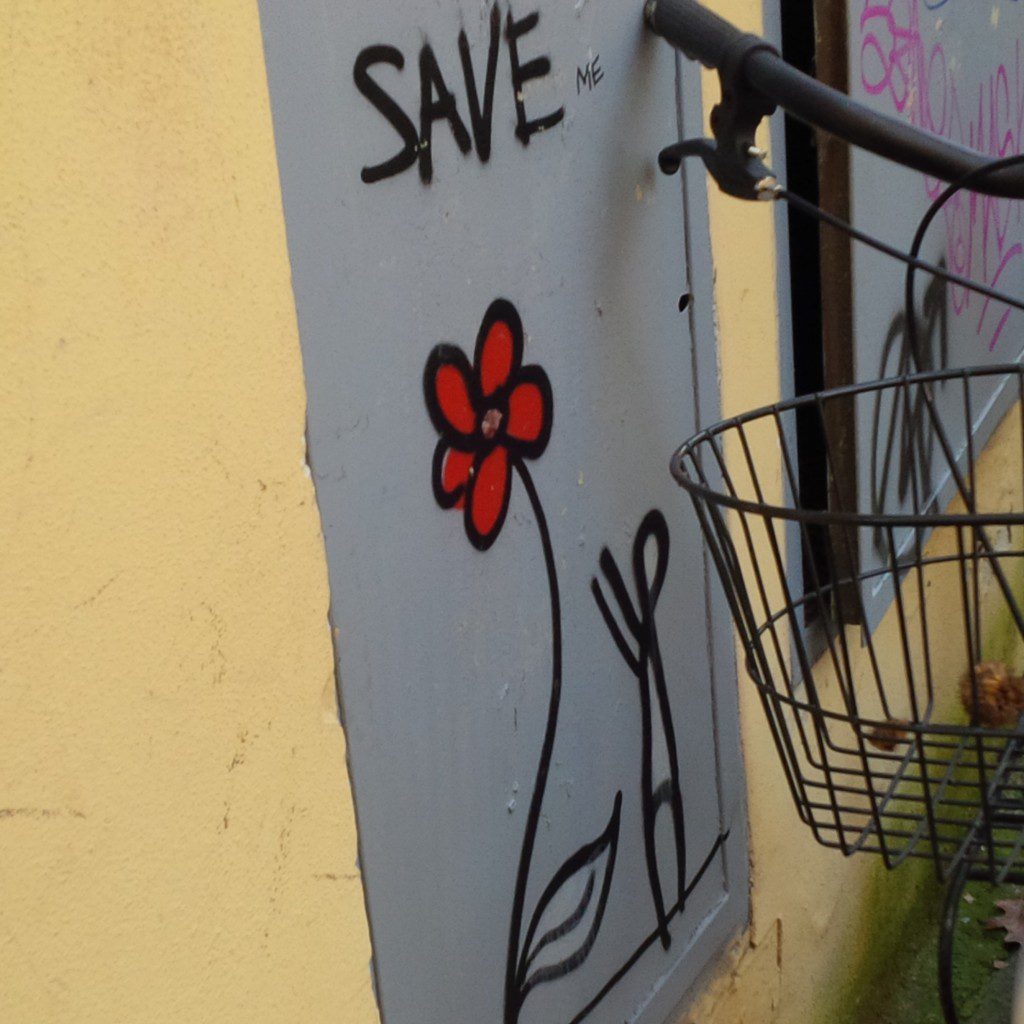
I had to laugh this morning when I went out to take these photos – after refuelling with coffee and croissant – a rather large van was carefully negotiating it’s way around these oddly parked bicycles – rather kindly I felt – I wonder what condition their owners found them in on their return?

