

Ladies, Imagine for a moment that you are a true child of the Renaissance, living in Florence in the Cinquecento!
You live with your wealthy family in quite a large palazzo, most probably beautifully decorated inside, with wall hangings and upholstery made of the most sumptuous materials that your father makes his living by creating and selling. Nonetheless, you might have to do battle with hungry pigs in the street outside your front door, and step over chickens as well as horse-poo in your courtyard – but that was normal in Renaissance Florence.
Every Sunday, you are expected to dress up and attend the nearest Church, which is probably only a few steps from your home. You have been told regularly that as the second daughter of the family you are privileged to be “intended for the Church”, but aged only 13 you have no clear idea of what this means until your 14th birthday, when you are dressed in a special white robe and encouraged to become very excited at the honour about to be conferred on you.
Unexpectedly, you feel exceptionally pretty as you are taken to the Convent for your special day, the day when you will enter the confraternity as a Novice Bride of Christ. If, after your Noviciatory, you are considered Holy enough to Take your Vows and become a True Bride of Christ you will then have your head shaved and have to wear a surplice and a wimple for the rest of your waking life. Perhaps not the future that you had envisaged for yourself and later, also for your clever sister?
This, I understand, was the fate of Plautilla Nelli, aged only 14 in 1537 when she was sold into the Dominican Convent of Santa Caterina da Siena, which was known as “di Cafaggio” as it was “fenced-in” although it was not a not completely closed order until 1548. Her skills in the all-important disengo (drawing) were just emerging but she had never been taught how to paint or even to study how to design a painting. We are not told whether she embraced or just accepted her fate as a Novice Nun but she certainly determined to make the best of her life and not give up her pleasure in making Art.
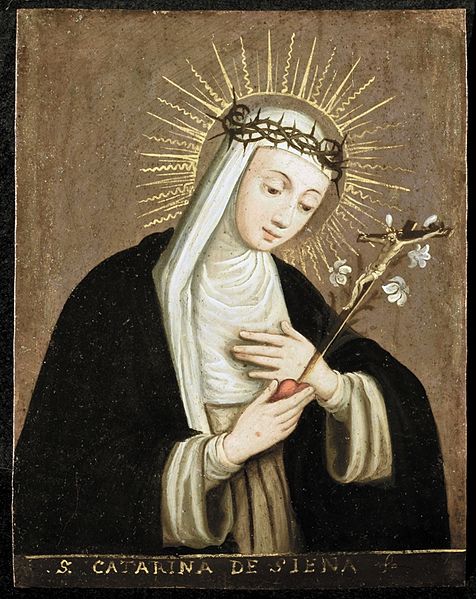
In time, her paintings would draw the attention of Art Lovers in Florence and her paintings of St Catherine of Siena, in particular, were sold by the Convent to many a rich merchant in the wealthy City of Florence, thus creating income for the “di Cafaggio”. Unsurprisingly, the Nuns themselves were not allowed to earn money.
Famous for his Lives of the Artists as well as his own art and architecture, Giorgio Vasari wrote about Nun Artist Suor Plautilla Nelli. In fact, she was the only woman mentioned in his books. He claims that “in the houses of gentlemen throughout Florence, there are so many pictures, (by Nelli) that it would be tedious to attempt to speak of them all.” Vasari also implied that Nelli’s figures and faces looked feminine, but at least he acknowledged that the “best among her works are those she imitated from others, which demonstrates that she would have created marvellous works if, like men, she had been able to study and work on design and draw natural objects from life.”
Shut away for most of her life in a Convent where drawing from life was a Sin, this was hardly surprising!
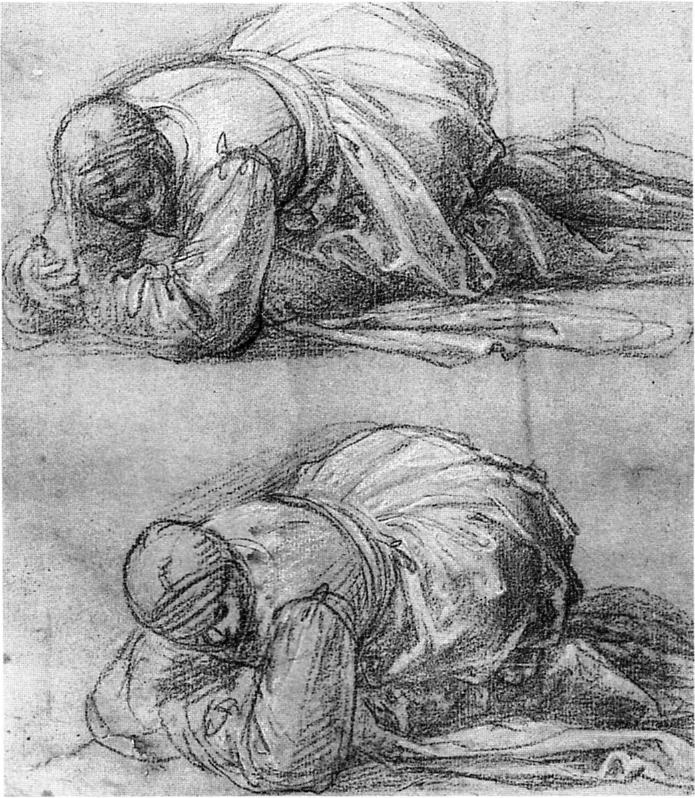
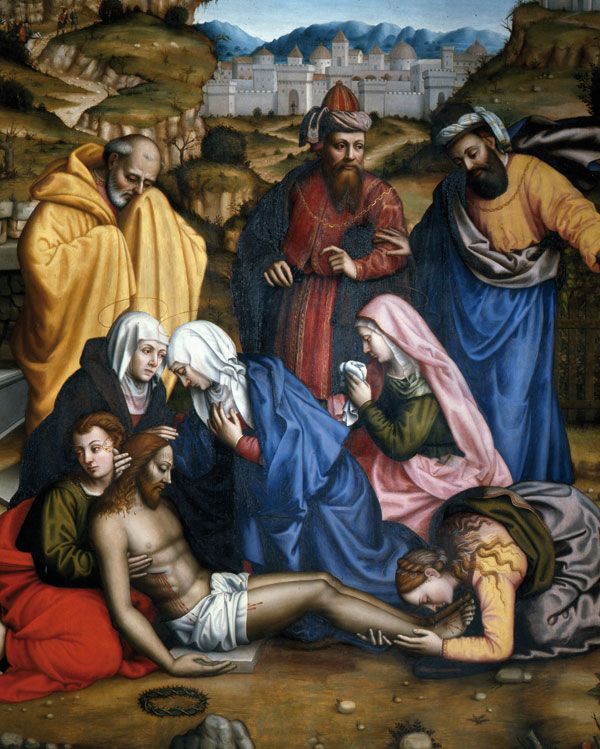
Having attracted a following for her small paintings, Nelli was encouraged to develop her skill and given the sketches of Fra Bartolomeo for his Lamentation for the Dead Christ to study. Not having ever had the opportunity to study figures from life, Nelli used these images to create her own Lamentation, a painting (shown below) which is still hung in the Cenacola designed for the Dominican Monks of San Marco – the Brother Church and Monastery of the now destroyed Ex Convent of Santa Caterina da Siena.

Other Nuns, who wanted to paint, began to learn about Nelli’s burgeoning Bottega and specifically applied to join her in the Convent of Santa Caterina da Siena. It was a period of increased demand for Convents and between 1500 and 1520 four new convents had to be built in the city to support the requirement for female accommodation.
Advancing Women Artists, an Art Charity founded by author Jane Fortune has supported the restoration of many works by female artists from Florence, and four of Nelli’s recently restored works, including the image of Saint Catherine of Siena receiving the stigmata, are already on display in the Convent of San Salvi, just a short bus ride from the City Centre.

Plautilla Nelli – knowing that nearly all the Monasteries in Florence had a Last Supper in their Cenacolo (Refectory), which enabled the Monks to sit down and eat with Jesus and the Disciples at this pivotal moment of Betrayal by Judas Iscariot, persuaded the other painting Nuns that with their help she too could paint a Last Supper for display in their own Cenacolo. Nelli must have seen some of these examples in some form or another because she adopted the format of showing Jesus on the opposite side of the table from the good guys and showed him with a dark face – similar to Ghirlandiao’s Judas in Ognissanti or even Fra Angelico’s idea to make images of Judas with a black halo?
Their table is strewn with religious symbols such as a Sacrificial Lamb of God in front of Jesus, walnuts for the Trinity, a knife ready for Peter to use in the Garden of Gethsemane and a bowl of lettuce foretelling Judas’ repentance and suicide in the Potters Field.
Last week, October 14th 2019, after more than four years in restoration, AWA finally unveiled Nelli’s huge (21 x 7 foot) Last Supper, most painstakingly and wonderfully restored by Rosella Lari, shown below in front of her work.

This remarkable woman artist has painstakingly cleaned, recreated and restored the artwork of another remarkable woman – Nun Pautilla Nelli, who, having become a woman almost invisible after her death in is now brought back to life and public attention through the hard work and financial support of Jane Fortune, Linda Falcone and the many supporters of the Advancing Women Artist group
Nelli signed her work “Pray for the Paintress” – signifying this was the work of a woman – and Long may her work continue to encourage other woman artists to make the most of their lives!
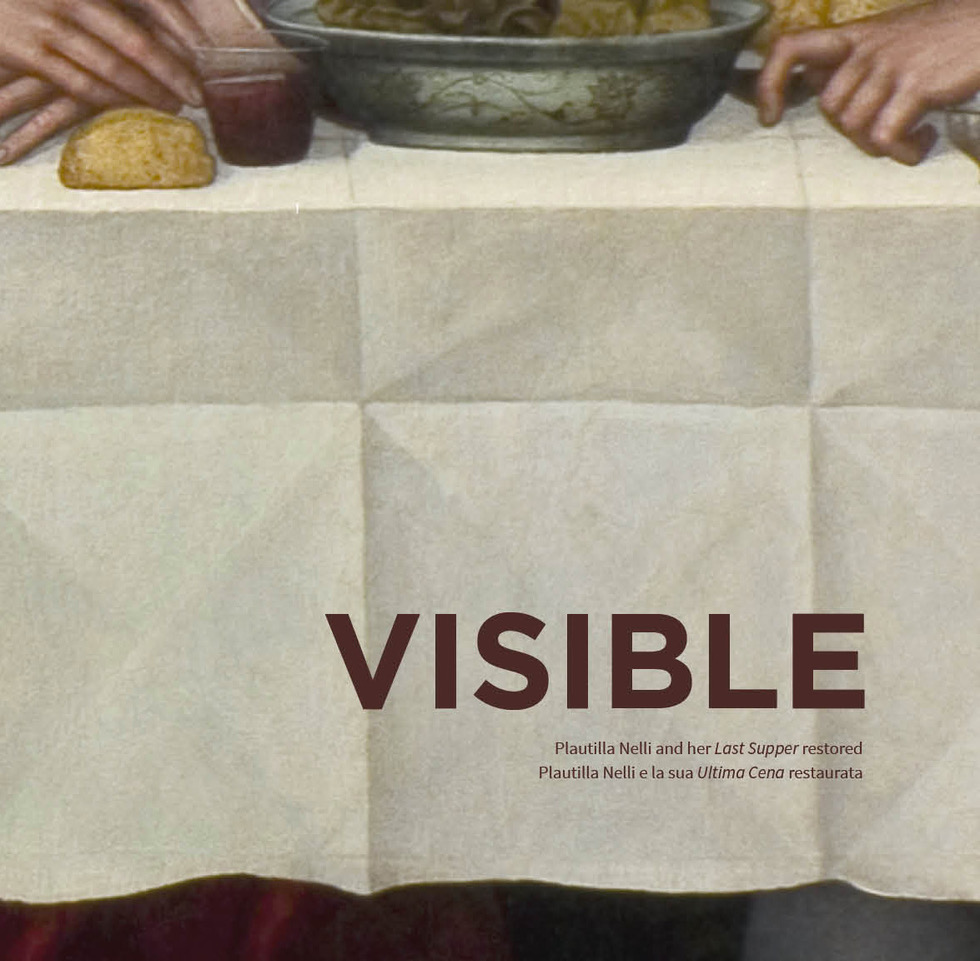
NB: The painting is now hung high on the wall in the Cenacolo of the Museo di Santa Maria Novella – directly opposite another Last Supper by Allessandro Allori
If you too would like to help AWA support many other important paintings by currently invisible women please use one of these links to their website and consider becoming an Art Angel or one of the many other ways you can support this exceptional charity.

Thank you so much for bringing this restoration work – and the life and paintings of Nun Pautilla Nelli – to my attention so beautifully.
Thank you, Ann, for your kind comment. It is good to hear from you and I hope that you are well. Maybe see you back in Florence one day to visit the painting?
Wimpole?. X
wretched spellcheck! – but I should have noticed – thank you Sarah!
Brava Penny a very interesting blog and loved the Nelli aspect as a young girl of 14 being Sold to a convent gave it a personal feeling !!! Grazie Mille ps you are becoming a Last Supper Expert perhaps a book is in order ?xoxox
Thanks, Leslie – also for passing my other blog to Linda -I hope that I can answer all her questions. We have a lot of info to share.