
Madonna of the Harpies by Andrea del Sarto

This famous painting displayed in the Uffizi Gallery in Florence was painted in 1515-17 by Andrea del Sarto for the Poor Clare nuns of San Francesco dei Macci. In 1335 this was a hospital founded by the Macri family, with an attached convent and a church known as San Francesco al Tempio.
It also provided a refuge for battered wives.
Mary and Jesus are flanked by two saints , Saint Francis, and St John the Evangelist , which would not be an unusual subject matter for any church or monastery in Renaissance Florence – but the strange creatures featured on the pillar that Mary is standing on do give one pause for consideration….what message would these naked legs akimbo ladies offer the nuns?
One likely interpretation is that the picture shows the Virgin Mary triumphant over evil, and the monstrous “Harpies” , as they were known, are based on a text about locusts described in the Book of Revelations . Close inspection does allow that these infernal legs could indeed be the legs of locusts – and they are certainly in an uncomfortable position for a polite young lady!

Definitions of a harpie include:-
- A rapacious monster described as having a woman’s head and body and a bird’s wings and claws or depicted as a bird of prey
- A grasping, unscrupulous woman.
But what were the Nuns – or indeed the battered wives – expected to make of this image? The two cherubs on either of the plinth seem worried about holding Mary in place , the Harpies perhaps seem to have their hands tied behind their backs – but their legs and wings look in working order – but Mary looks more concerned about holding her struggling infant than withstanding them, – so presumably she feels she has them beat – and maybe the tied up women has something to do with the battered wives?
Incidently, it is said that the pensive face of the Virgin Mary was actually a portrait of Andrea del Sarto’s own wife , Lucrezia – the lady also featured in his famous Last Supper where the pair of them , depicted as servants, gaze down on the unhappy 13 supper guests gathered bickering around the table below.
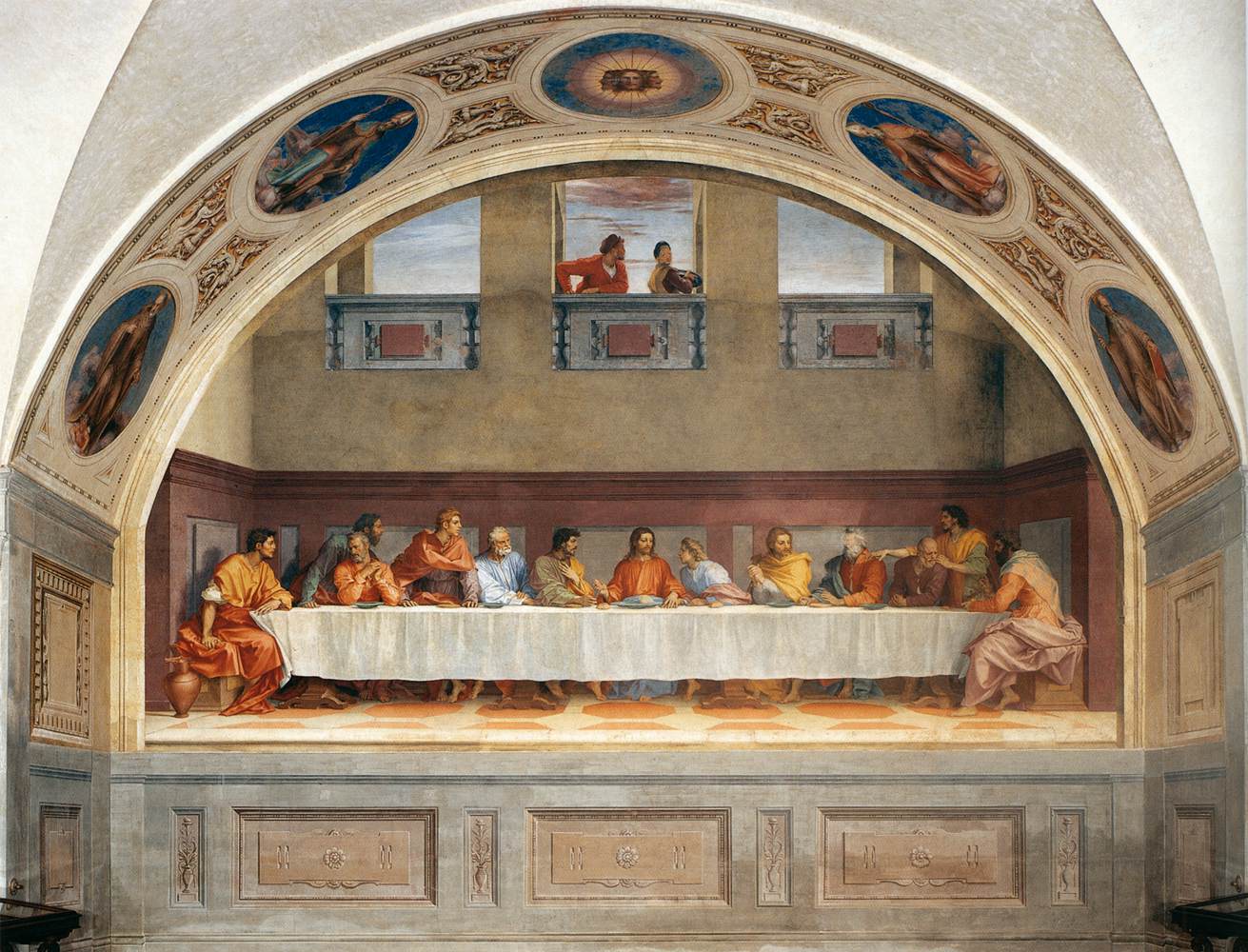
This Last Supper, shown above, was painted in 1427. It was also his last important work and can be found in San Salvi.

Trackbacks/Pingbacks