
We are starting off the year 2014 sharing our private impressions of Italy, in Florence during May- with five Thursday evening workshops with Australian Professor Ian Bickerton – I am really looking forward to it!
Can you recall your first impression of Italy and/ or of Italians?
When I was first asked this question I said confidently that it was a Room with a View – the book which defined Edwardian England , as well as forming romantic ideas of how life could be much much exciting if more Brits ‘allowed’ themselves to live life to the full …….or more like an Italian!
That was the first book I knew which stirred those senses – and I read it a long time before 1985 when the Merchant-Ivory award-winning film came along with a score by Puccini to hammer the point home!

However when I thought about it a bit more though there were far earlier whiffs of Italian excitement offered before I even hit my teens!
One of my earliest film loves was from this sequence from Lady and the Tramp – not set in Italy but in the USA but never forgotten – silly as it is – it fixed my ideas about Italian romance, singing waiters, Italian food and even my love of cocker spaniels forever.
Lady and the Tramp– click here for short YOUtube link
An English education provides ample opportunities to study Shakespeare -, who clearly loved Italy and the Italians too – making many scholars wonder whether he was actually in Italy at some period of his life – or even whether these major works were actually written by someone who had more access to Italy – or had more education, such as the Earl of Oxford, might have written these works.
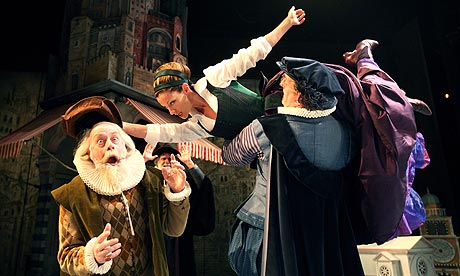
What is clear is that thirteen of the accepted Shakespearean plays are set in – or about – Italy. There was a lot more Italian Influence in Elizabethan society than originally thought and through Shakespeare – a lot more seminal perceptions of Italy in England than most people realise. For your interest these plays are :- All’s Well that Ends Well, Antony and Cleopatra, Coriolanus, Cymbeline, Julius Caesar, The Merchant of Venice, Much Ado About Nothing, Othello, Romeo and Juliet, The Taming of the Shrew, ( image above) , Titus Andronicus, The Two Gentlemen of Verona, and The Winter’s Tale.

Starting around 1660 the British developed the uncomfortable Grand Tour ‘ with horse-drawn carriages leaving from London crammed with people and luggage and heading across Europe on a voyage culminating in Naples – despite the dire warning see Naples and Die! The message having changed from the original premise of Naples being the most beautiful place, after which one could die in peace having seen it – to Naples, rife with syphilis , being a place where you were most likely to encounter a fatal disease – and in recent years during the rubbish strike – see Naples and die of the stench of rotting debris!

This traditional trip of Europe was undertaken by mainly upper-class European , and most frequently British, wealthy young men embarking on an educational rite of passage with a standard itinerary designed to introduce them to the cultural legacy of classical antiquity and the Renaissance. This was not only a time of reading and writing a travelogue – but also of illustrating the images of Italy witnessed along the route – and – in those days before photography – taking home a large portrait of yourself painted by a well known Italian artist – like Pompeo Batoni (1708-1787) produced for Sir Gregory Page-Turner (Yes- this is a real name-Ed!)to show off to his friends.
One of the best known Italian Grand Tourers – Giacomo Casanova unfortunately perceived and wrote of the English that, “the people have a special character, common to the whole nation, which makes them think they are superior to everyone else” – so it doesn’t sound as if we made ourselves particularly popular on our travels – perhaps just as well that we are not doing a four days course on perceptions of the English!

This was followed by the Victorian passion for Italy – Lord Byron and his set , Shelley, Mary Godwin and Claire Clairmont where all emotionally and sexually liberated – and some even died – whilst in Italy. No English school girl gets away without studying that rather extraordinary bunch!

Finally getting back to our beloved EM Forster – this perceptive man has shaped the British perceptions of Italy after his first visit to Florence with his mother in 1905 , writing the basis of Where Angels Fear to Tread from his observations during that three week trip.
This novel takes a much greater swipe at the foolish English attitudes towards Italians than the more popular A Room with a View – in fact it makes one cringe with embarrassment to an extent that even Cecil Vyse only scratches the surface of –
which probably explains why of these two excellent books it is the latter that is one of the 100 most popular books written in the English language!

Also featuring in the UK top hundred books is Brideshead Revisited, part of which portrays the romance and glamour that was Venice between the Wars and laced throughout with the endless seduction of Roman Catholicism – this too has been indelibly stamped on the British imagination through film and an excellent TV adaptation.

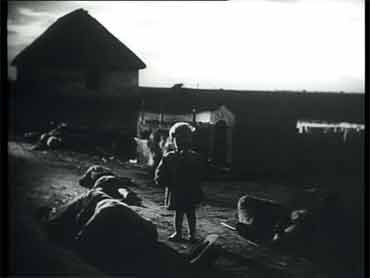
After WW2, Italy was faced with a financial crisis that made our current problem look like having temporarily mislaid our wallet, – and the resulting out-pouring of Neorealism films, whilst unpopular with Italians who wanted to protect their “image” abroad, did open the eyes of the Italians immigrants in America to the crisis in their homeland. The sixth episode of Paisan, in particular, reverted my thoughts to the Italian generosity when it comes to food – a family , to help some partisan friends , share their frugal meal of unappetising looking river eels with them and the 2 downed airmen they are trying to get to safety – and for this selfless act the entire family , except the youngest child, are shot by the Germans.
But overall my perceptions of Italy from books and films are of beauty , sometimes in decay like the ageing dowager that is Venice, but always beautiful. Aged 16 I couldn’t wait to visit Italy and I fell deeply in love with the country, especially Florence, when I got there on a school Art trip that I had worked and saved to join!
Of Italians themselves the impressions are mixed: warm and impulsive and generous, prepared to die for their love, – but there are also Shakespeare’s proud Italians prepared to sacrifice or reject their beloved children for the sake of their honour – reprised in the Godfather and other Mafia movies. In War stories they are often shown as cowardly but I leave the last word on that to Captain Correlli when he defends the rights for his group of Officers to sing Opera in preference to preparing for battle – “Well, we’re Italian, famous for singing, eating…..making love.“

So this is just lightly skimming the surface of some of the books, plays and films we will cover in our exploration of Italy in the Anglo-American Imagination – and after out talk we will get a chance to watch our favourites but just sitting here writing is bringing hundreds of film images and book covers to mind – so for more information click here and please do get in touch with us with any questions – or even suggestions – all welcome!
http://www.beyondtheyalladog.com/category/lead-story/

Your new project sounds really interesting; I do hope its so oversubscribed that you get to make a repeat event of it at other times of the year!! As you know, MY introduction to Italy was as a 19 year old university study abroad student living in Florence during the flood of 1967. Italian movies, books, art history and language classes and many visits have shaped my life ever since!
I wish we were being oversubscribed – I am sure it will be fascinating but we do need more people!